
Stucco & Brick Painting
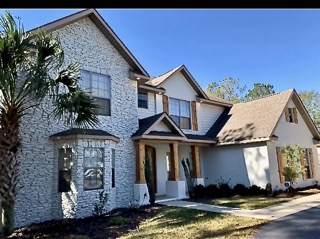
Stop watching paint peel—choose coatings that let masonry breathe. Paint Doctors uses mineral-based and breathable acrylic coatings specifically designed for stucco and brick in Alabama's humid climate.
 Licensed & Insured
 4.6 Star Rating
 Same Day Estimates
Why Masonry Paint Fails
And how we prevent it
⚠️ Common Problems
- Moisture trapped under non-breathable paint
- Cracks not sealed before painting
- Wrong paint type (low perm rating)
- Efflorescence pushing through coating
- High-pressure washing damaging surface
✓ Our Solutions
- Breathable coatings (15-70+ perms)
- Crack repair with flexible sealants first
- Moisture testing before painting
- Alkaline-resistant primers
- Low-pressure washing (1,200-1,500 PSI)
Stucco Painting
Breathable coatings for porous surfaces
Moisture Trapping
Stucco is porous—like a rigid sponge. It absorbs rain and humidity. If paint forms a barrier, moisture gets trapped inside and pushes paint off from behind.
Crack Repair First
We fill hairline cracks with elastomeric caulk and larger cracks with flexible stucco patch compound. All repairs move with the house.
Breathable Topcoat
We use coatings with 15+ perm ratings. Standard house paint only has 5-10 perms—not enough for stucco in humid climates.
Brick Painting
Mineral-based coatings that protect
🖌️ Mineral-Based Paint
- 70+ perm rating—excellent breathability
- Chemically bonds with masonry
- Fades gradually, never peels
- Preserves brick health
❌ Standard Acrylic
- 5-10 perm rating—traps moisture
- Film sits on top of brick
- Peels and flakes over time
- Can cause spalling damage
Our Process
Why our masonry coatings last 15-20 years
Moisture Testing
Test moisture content (must be <15%)
Crack Repair
Fill cracks with flexible sealants
Low-Pressure Wash
1,200-1,500 PSI cleaning
Masonry Primer
Alkaline-resistant bonding primer
Breathable Topcoat
Two coats of breathable paint
Frequently Asked Questions
Stucco absorbs water that can't escape through non-breathable paint. Cracks let water in where it gets trapped. Standard house paint (5-10 perms) doesn't breathe enough for stucco. Solution: breathable coatings (15+ perms) and proper crack repair.
Elastomeric is great for bridging cracks but has low breathability (2-5 perms). In Alabama's humid climate, it often traps moisture causing worse failures. We typically recommend breathable acrylic or mineral paint unless you have severe cracking AND confirmed drainage behind stucco.
Efflorescence forms when water evaporates from masonry, leaving salt deposits. Fix by: (1) Remove deposits, (2) Find and fix moisture source, (3) Prime with alkaline-resistant primer, (4) Topcoat with breathable paint. Don't paint over it without fixing the moisture problem.
Standard acrylic paint traps moisture and causes spalling (surface flaking). Mineral-based paint (70+ perms) chemically bonds with brick through silicification—it becomes part of the masonry. It breathes naturally and lasts 15-20 years.
Ready for Masonry Coatings That Last?
Free assessment for stucco and brick painting. We'll test moisture, inspect cracks, and recommend breathable coatings—no pressure, just expertise.